Branding, the Vogue Way
How to build a brand that feels inevitable, not invented
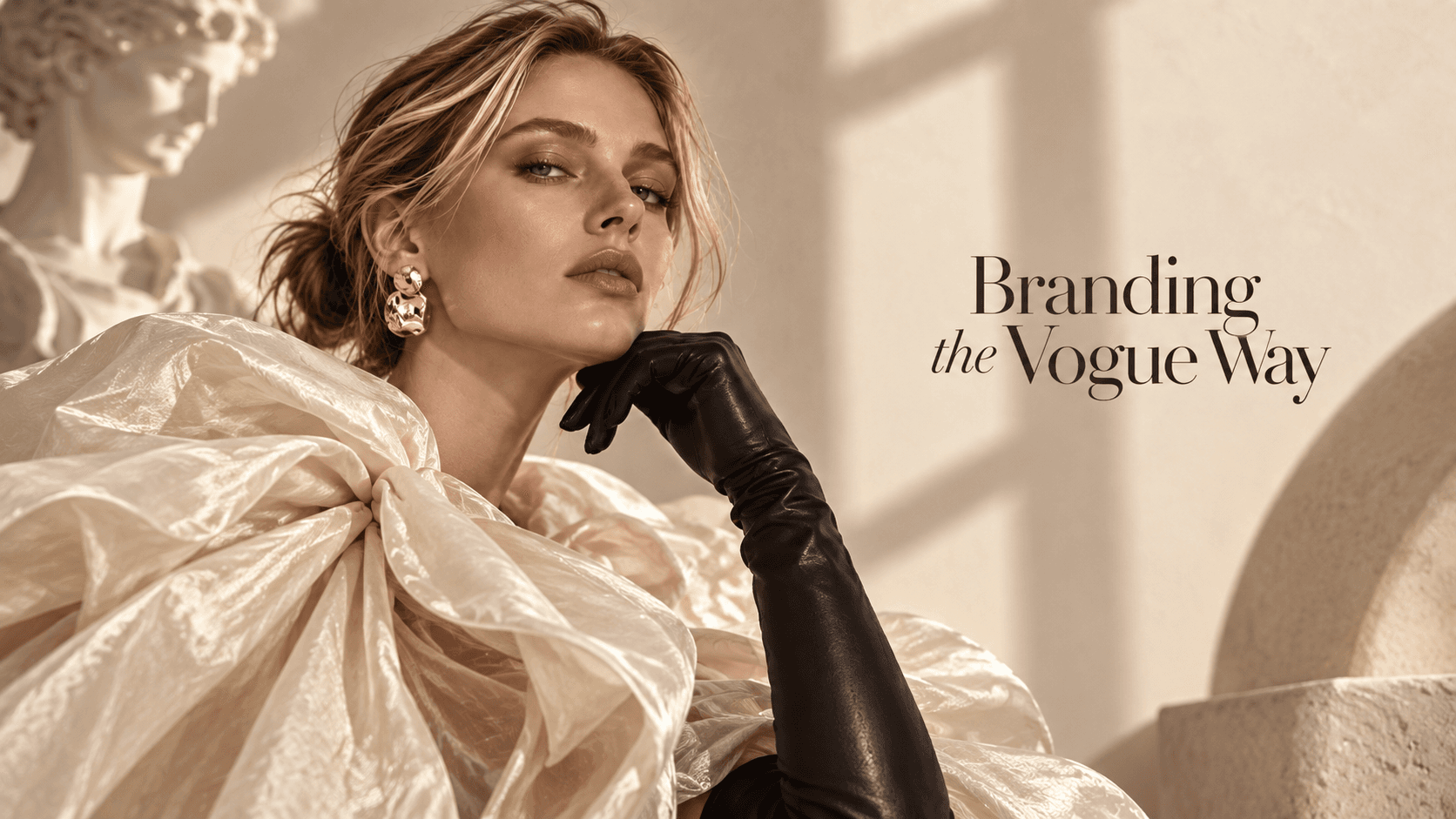
Branding is not a logo. It is not a colour palette. It is not a clever name and a nice Instagram grid. Branding is the feeling people get before they can explain why they trust you, want you, and remember you. It is the atmosphere that follows a product into a room.
The best brands do not chase attention. They curate desire.
If you want to build a brand that looks expensive, confident, and culturally fluent, start here.
1) Decide what you want to be famous for
Every iconic brand has one sharp point. One sentence. One promise.
Not “high quality,” not “premium,” not “for everyone.” Something specific.
Examples of sharp points:
Minimal skincare that feels clinical, not cute
Streetwear that reads like contemporary art
A home brand that looks like an Italian hotel lobby
A tech product that feels calm and human
Your brand is not what you sell. It is what you stand for, repeatedly, until the world believes you.
2) Build a world, not a look
A brand is a world with rules. The moment you step into it, you know what belongs and what does not.
A world has:
A point of view
A taste level
A rhythm
A sense of place
A voice
This is why branding is powerful. People do not just buy objects. They buy entry.
3) Choose your archetype, then dress it
Archetypes are shortcuts to meaning. You do not need to say “luxury” if your brand behaves like it.
Pick one primary archetype:
The Icon: timeless, composed, legacy energy
The Rebel: sharp, disruptive, street, provocative
The Muse: romantic, artistic, sensual
The Architect: minimal, precise, intentional
The Host: warm, welcoming, generous
The Scientist: clinical, credible, performance
The Explorer: bold, worldly, adventurous
Then make every detail align with that archetype. A brand becomes believable when it is consistent.
4) Your logo is not your identity
A logo is a signature. Your identity is everything around it.
Identity includes:
Typography and spacing
Photography style
Packaging experience
Materials and textures
Motion and editing style
UI details
Copy tone
Customer service language
The way you announce a launch
If your identity is strong, the logo can be quiet. Quiet brands often feel expensive.
5) The luxury formula is restraint plus detail
Luxury is not loud. It is controlled.
Luxury branding usually has:
A limited colour story
One or two typefaces
Beautiful spacing
High-quality imagery
Materials you can feel through the screen
Fewer words, better words
A premium brand does not explain itself too much. It invites.
6) Create a signature, one thing only you would do
A brand needs a recognisable move. Something that becomes your fingerprint.
This could be:
A colour used in a specific way
A framing device, like a border or grid
A recurring typographic layout
A distinct photographic lighting style
A texture that appears in packaging and web
A tagline that feels like a manifesto
The goal is not novelty. The goal is recognition.
7) Sound like a person with taste
Brand voice is a discipline. It is not slang. It is not being “fun.” It is consistency.
Choose your voice on three sliders:
Warm to cool
Minimal to expressive
Formal to conversational
Then write rules:
Words you always use
Words you never use
Sentence length
Use of humour, or none
The way you describe product benefits
When a brand voice is consistent, it feels real. When it changes daily, it feels like marketing.
8) Make your brand a visual editorial
Think like a magazine.
Every brand should have:
A cover image style
A recurring layout system
A seasonal story
A campaign rhythm
A clear hierarchy of content
Your website should read like a well-edited issue. Your social should feel like a curated column, not a random mood board.
9) Build desire through storytelling, not shouting
Storytelling is not a long origin story. It is the art of choosing what to reveal.
Use these story layers:
Origin: why it exists
Craft: how it is made
Meaning: what it represents
Culture: what it references
Future: what it is building toward
A brand becomes magnetic when it has depth. People want to buy into something that feels larger than a product.
10) Consistency is the real marketing budget
The brands that win are not always the loudest. They are the most consistent.
Consistency looks like:
Same visual language across every touchpoint
Same tone across every caption, email, and page
Same design rules even when trends change
Same standards even when it is inconvenient
This is how brands become trusted. Trust becomes loyalty. Loyalty becomes growth.